Market2026-10-047 min
Why You Lose Customers on the Phone: The Psychology of the Unanswered Call
Between the first and fifth ring, a customer judges your business on a single clue: silence. What runs through their head, why the beep saves nothing, and how to turn that psychology in your favor in ten seconds.
Twenty seconds of silence
A ringing, unanswered call is a socially dense moment. In twenty seconds, the caller moves through three states: certainty ("they'll pick up"), doubt ("maybe they're busy"), then conclusion ("this business can't be reached"). The third state sets in far faster than owners believe — often before the fifth ring.
The key point is that the conclusion targets the business, not the moment. Nobody thinks "they had another call at the same time"; everyone thinks "they don't answer." The distinction is cruel because it turns a timing accident into a reliability judgment. And that judgment is never communicated to you: it's applied in silence.
Silence reads as a clue
Faced with no answer, callers interpret — and the interpretations all skew the same unfavorable way. "Maybe closed," though it's 3 PM on a Tuesday. "Maybe not serious," though you have fifteen years in the trade. "Maybe they don't need customers," though your calendar has gaps. Silence is a projection screen, and callers project the worst.
The mechanism is all the more powerful because the competitor, meanwhile, answers right away. The same customer who might forgive a forgotten silence doesn't compare your two situations as equals: they compare "nobody" and "somebody." In an economy where every other channel replies in seconds, the phone comparison has become brutal.
The beep discourages more than it helps
Voicemail was designed to catch the missed call; it produces the opposite effect. Fewer than 3% of callers leave a message in 2026 — the rest hang up before the greeting even ends. The reason is mental math: stating your request with no answer guarantee, then waiting for an uncertain callback, costs more effort than calling the next name on the list.
Add the signaling effect: a standard voicemail says "you will wait." In the age of instant replies, that message deters even motivated customers. Voicemail isn't a safety net; it's a filter that eliminates almost everyone — and you never see who it eliminated.
The 5-to-10-minute window
Time is the most underestimated factor in the whole chain. Data published by market players converges: a caller not called back within 5 to 10 minutes has already dialed the next number; past half an hour, most have decided elsewhere. The decision window closes while you're working — that is, precisely when you can't pick up.
This window isn't a whimsical customer demand: it's the direct consequence of the rest of their life. Their messages are read in seconds, their orders tracked in real time, their appointments confirmed to the minute. In that frame, a business answering "maybe tonight" isn't slightly late: it's in another decade.
The competitor doesn't win by being better
The costliest irony of this market: the competitor who picks up your customer usually did nothing better than answer. No better price, no better reviews, no better truck — just a person or a machine at the end of the line. Between 25 and 30% of calls to small businesses go unanswered during opening hours; that pickup differential is a customer source nobody measures.
That's good news in disguise. Fixing an availability problem is infinitely simpler and faster than fixing a quality, price, or reputation problem. The day you answer — or have something answer — at the market's pace, that free competitive edge disappears from them and appears for you.
Turning the psychology around
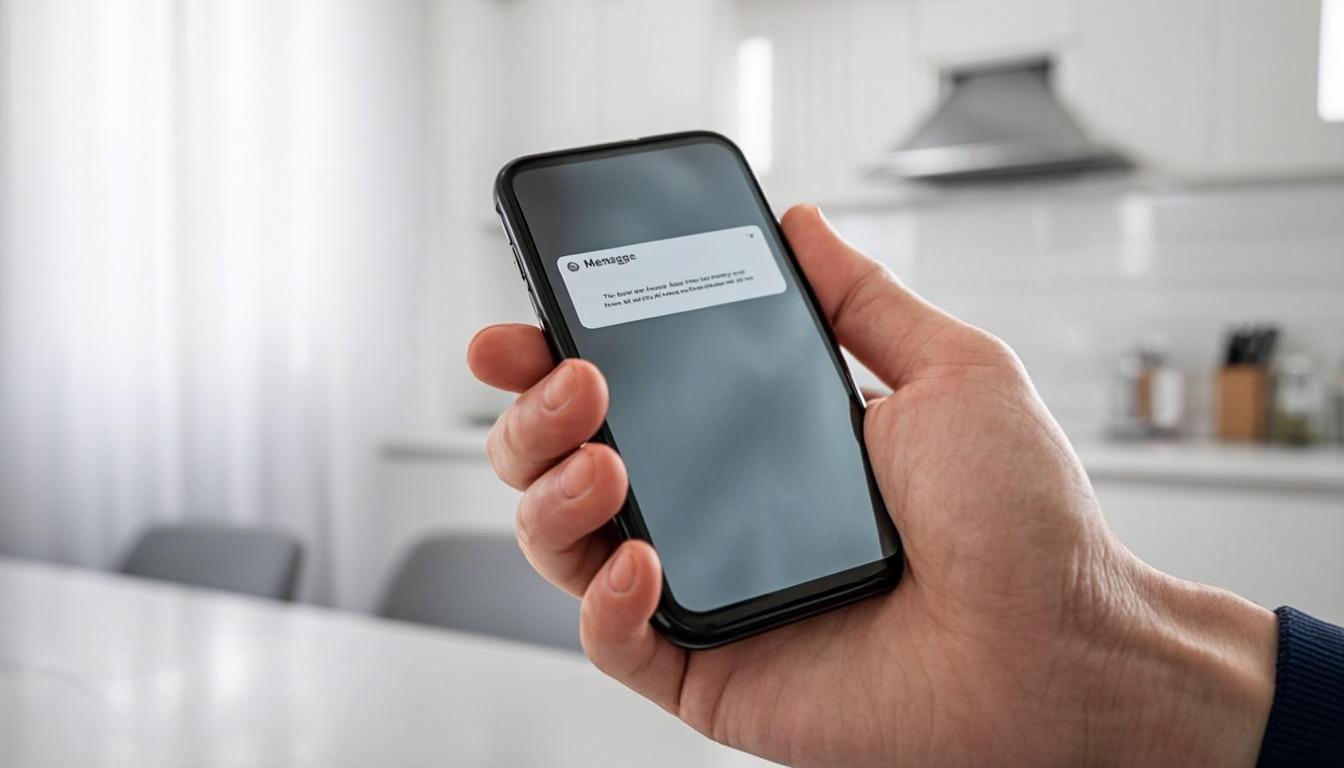
The same mental mechanism that condemns you can serve you. The customer who projects onto silence projects just as fast onto a response: a text received within ten seconds of the missed call says "this business exists, reacts, and talks to me." You go from unreachable business to available business before anyone even picked up.
That's Harch Signal's principle: text-back in under ten seconds, AI qualification, an appointment in your calendar, at $149 a month with no contract. Caller psychology won't change — it's rational. What can change is which side of the 5-minute window you're standing on.
FAQ
Questions we get
How many rings before a customer gives up?
Real abandonment starts well before standard rings run out: the mental decision often lands around the fourth or fifth. Set your no-answer forwarding early enough that a system takes over before the disappointment does.
Isn't calling back later enough?
Only if "later" means a few minutes. Past the 5-to-10-minute window, most callers have already contacted a competitor — your callback arrives after the decision. A 5 PM callback for a 10 AM call is almost always lost.
How do I know if I'm really losing calls?
Open your carrier's call log and count, over one week, incoming calls with no matching outgoing call within the hour. It's a crude, free measure — and most owners who run it for the first time discover a volume they never imagined.
Answered in under 10 seconds
Your next missed call can be the last one.
$149 credited on month 1. No commitment. Cancel within 30 days, no fees.